
- Home
-
-
![]()

What Can an OEM Cashmere Sweater Manufacturer Customize for Your Brand?
Views: 0 Author: Site Editor Publish Time: 2026-10-14 Origin: Site
![facebook sharing button]()
![twitter sharing button]()
![line sharing button]()
![wechat sharing button]()
![linkedin sharing button]()
![pinterest sharing button]()
![whatsapp sharing button]()
![kakao sharing button]()
![snapchat sharing button]()
![telegram sharing button]()
![sharethis sharing button]()
The differentiation between a generic private-label knitwear line and a premium, market-leading collection relies entirely on the technical customization capabilities of your production partner. Brand buyers and product developers frequently face a disconnect between their design tech packs and the final manufactured product. Cashmere is a volatile, high-cost fiber. Poor manufacturing choices lead to pilling, shape distortion, and compromised brand reputation. Contrast the limitations of buying wholesale or white-label blanks with the strategic advantage of true bespoke manufacturing. Purchasing off-the-shelf blanks restricts your brand to pre-determined fits, standard yarn blends, and basic colors. In bespoke production, every element signals premium quality and ensures long-term garment durability. Partnering with a specialized OEM cashmere sweater manufacturer bridges the gap between conceptual design and scalable, high-fidelity production. This guide details exactly which variables you can and should customize to build a superior product line.
Key Takeaways
Yarn and Fiber Control: Customization begins at the raw material level, dictating fiber length, micron count, and blending ratios (pure cashmere vs. silk/wool blends) to control cost and durability.
Structural Engineering: Beyond basic aesthetics, an OEM partner customizes gauge, tension, and knitting techniques (from intarsia to digital printing) to achieve specific drape and weight requirements.
Scalability vs. Customization Trade-offs: High-level customization (custom yarn dyeing, unique hardware) directly impacts Minimum Order Quantities (MOQs) and production lead times, though many manufacturers offer mixed-size flexibility.
Risk Mitigation: Successful OEM partnerships require rigorous sampling protocols, including lab dips for color accuracy and wear-testing for pilling resistance, before committing to bulk production.
Table of Contents
Custom Options from OEM Cashmere Sweater Makers
A successful custom OEM cashmere sweater requires precise adherence to tech packs. Brands need consistent sizing across production runs, verifiable yarn quality, and structural durability. Achieving these criteria demands deep technical control over every phase of the manufacturing process, starting from the raw fiber and ending at the final pressing station.
Raw Material and Yarn Development
Customization starts before the knitting machines even power on. The selection of raw materials dictates the garment's hand feel, performance, and retail positioning. Factory partners source raw fiber from specific regions, such as Alashan in Inner Mongolia, known for producing fibers with superior length and fineness.
Specifying yarn counts: You must select the appropriate yarn count for your design. A 2/26Nm or 2/28Nm yarn count provides the ideal thickness for standard, versatile mid-weight garments. Thicker counts like 4/26Nm suit heavy winter collections, while finer worsted counts like 2/48Nm or 2/60Nm work for transitional seasonal pieces and ultra-lightweight layers.
Selecting fiber grades: Cashmere quality depends heavily on the physical dimensions of the raw fiber. Grade A cashmere features a diameter of 14 to 15.5 microns and a length exceeding 34 millimeters. Specifying Grade A balances extreme softness with the structural integrity required to prevent premature fiber breakage. Lower grades feel rougher, pill faster, and degrade quickly after multiple washes.
Custom blending options: Pure cashmere offers ultimate luxury, but blending alters performance metrics. A 70% cashmere and 30% silk blend adds subtle luster and increases tensile strength, creating an excellent drape for womenswear. Blending with extra-fine merino wool maintains a premium hand feel and excellent thermal regulation while altering the raw material cost structure.
Knitting Techniques and Gauge Selection
The physical construction of the knitwear determines its visual appeal and structural stability. You must align your design intent with the correct machinery. Modern facilities utilize computerized flat knitting machines from brands like Shima Seiki or Stoll to execute complex programming.
Matching machine gauge: The gauge (GG) indicates the number of needles per inch on the knitting bed. You must match the gauge to the intended weight of the design. A 3GG or 5GG machine produces chunky, heavy knits suitable for outerwear sweaters. A 12GG machine serves as the industry standard for classic sweaters, while 14GG or 16GG machines produce ultra-fine, lightweight layers.
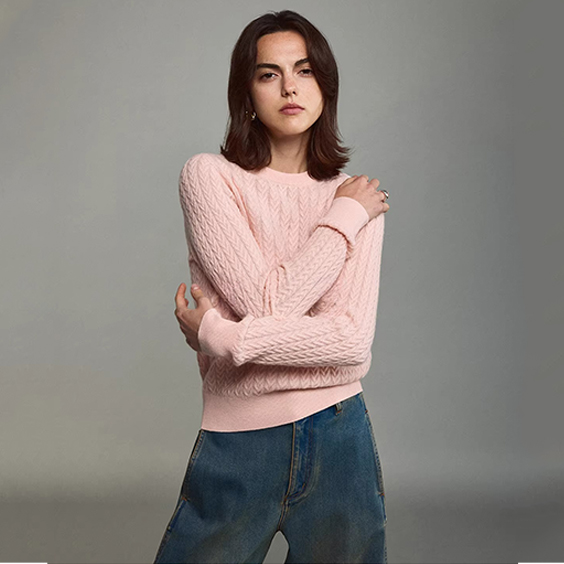
Custom stitch programming: You can program pointelle, complex cable knits, intarsia, and intricate jacquard patterns directly into the software. This allows for exact replication of your design motifs across thousands of units. Factory technicians adjust the stitch tension digitally to ensure the fabric does not become too stiff or too loose.
Advanced surface treatments: Traditional jacquard often creates bulk and stiffness due to the floating yarns on the reverse side. Advanced facilities integrate digital-printed knitwear techniques. This allows brands to apply complex, multi-color graphics directly onto the knitted panels without adding weight or compromising the natural stretch of the fabric.
Machine Gauge (GG)
Typical Yarn Count
Garment Application
Fabric Characteristics
3GG - 5GG
4/26Nm or multi-ply
Chunky cardigans, heavy winter outerwear
Thick, highly textured, maximum warmth
7GG - 9GG
2/26Nm (multi-ply)
Mid-weight textured sweaters, ribbed knits
Substantial feel, excellent stitch definition
12GG
2/26Nm or 2/28Nm
Classic crewnecks, V-necks, everyday wear
Versatile, smooth surface, standard retail weight
14GG - 16GG
2/48Nm or 2/60Nm
Base layers, spring/summer transitional knits
Ultra-lightweight, sheer drape, highly breathable
Silhouette, Grading, and Fit
Standardized sizing rarely satisfies a global customer base. Bespoke manufacturing allows you to engineer the fit specifically for your target demographic. Factory pattern makers translate your flat sketches into mathematical knitting programs.
Developing custom sizing charts: You can adjust armhole depth, torso length, and shoulder width to meet specific regional standards. A pattern graded for the US market requires different proportion scaling than a pattern graded for the Asian or EU markets. You dictate the exact grade rules between sizes (e.g., adding 2cm in width per size).
Translating 2D patterns into fully fashioned knitwear: Unlike cut-and-sew operations that waste expensive fabric, fully fashioned knitting shapes each panel directly on the machine. The factory knits the front, back, and sleeves to the exact shape required, increasing or decreasing stitches to form curves. This eliminates yarn waste and creates cleaner, stronger seams.
![内蒙古毛衣2-1.jpg]()
Trims, Hardware, and Finishing Details
The final details separate standard production from luxury execution. You control the finishing touches that consumers interact with daily. Factory technicians apply these details during the linking and finishing stages.
Customizing ribbing tension: Cuffs, collars, and hems often stretch out over time if poorly constructed. You can specify higher tension settings or incorporate invisible elastane threads (plating) into the ribbing to ensure memory and shape retention.
Specifying linking techniques: The method used to join the knitted panels matters. Hand-linked seams provide superior stretch and a flatter, more refined finish compared to overlock machine stitching. The factory must match the linking machine gauge to the knitting machine gauge (e.g., using a 16-point linking dial for a 12GG sweater) to ensure the seam stretches perfectly with the fabric.
Custom hardware integration: You can integrate branded zippers, genuine horn buttons, or custom metal toggles. Bespoke labeling, woven neck tapes, and custom hangtags complete the brand presentation.
![Luxury Women's Cashmere Sweater Manufacturer]()
How to Judge a Factory’s Real Production Ability
Assessing a manufacturer's stated capabilities requires looking past their marketing materials. You must evaluate how their technical infrastructure translates into your desired luxury product outcome. A factory's true skill reveals itself in their handling of tension, shrinkage, and chemical finishing.
Translating Tech Packs into Prototypes
Custom cashmere sweater prototyping transforms technical specifications into physical samples. Experienced manufacturers use pattern-making, knitting programming, and shrinkage adjustments to achieve accurate garment dimensions. Proper testing of yarn tension, washing shrinkage, and finished measurements helps ensure prototypes meet design requirements before bulk production.
High-End Craftsmanship and Design Integration
Luxury cashmere sweater manufacturing requires precise knitting, consistent stitch tension, and skilled finishing techniques. Quality indicators include clean intarsia patterns, well-defined cable knits, smooth seams, and carefully attached accessories. Attention to construction details improves garment appearance, comfort, and long-term durability.
Color Matching and Custom Dyeing
Custom cashmere dyeing includes yarn dyeing and garment dyeing, each offering different production advantages. Yarn dyeing provides consistent color before knitting, while garment dyeing offers additional finishing flexibility. Pantone references, D65 lighting inspections, and lab dip approvals help maintain color accuracy. Proper dyeing and washing processes also preserve cashmere softness.
MOQ, Lead Time and Production Scaling Rules
Custom cashmere production planning requires balancing minimum order quantities, material availability, manufacturing capacity, and delivery schedules. Stock yarn generally supports smaller orders and faster production, while custom dyeing and complex knitting require additional preparation. Clear production agreements help brands manage costs, inventory, and seasonal launches.
Minimum Order Quantities (MOQs) and Cost Dynamics
Custom cashmere sweater MOQs commonly range from 100 to 300 pieces per style, depending on factory requirements. Stock yarn can reduce order minimums and production costs, while custom-dyed or custom-spun yarn generally requires larger quantities. Buyers should confirm color and size flexibility, yarn availability, and pricing before placing orders.
Production Lead Times
Cashmere sweater production lead times depend on design complexity, yarn sourcing, sampling revisions, and order quantity. Initial prototypes may require 2–4 weeks, while bulk manufacturing often takes 4–8 weeks after final approval. Custom dyeing, complex patterns, and peak-season demand can extend schedules, making early planning essential.
QC, Durability Tests and Industry Compliance
Cashmere sweater quality control focuses on material authenticity, garment durability, dimensional stability, and manufacturing consistency. Testing and inspections help verify that finished garments meet approved specifications. Clear quality standards reduce defects, protect brand reputation, and support reliable bulk production.
Physical Testing Standards
Cashmere quality testing includes pilling resistance, colorfastness, and dimensional stability. Martindale-based testing can assess abrasion-related performance, while ISO 105-C06 evaluates colorfastness to washing. Appropriate yarn twist, knitting tension, and finishing processes help reduce pilling, shrinkage, and garment deformation.
Ethical Sourcing and Certifications
Responsible cashmere sourcing involves verifying fiber origins, animal welfare practices, and environmental management. Programs such as the Good Cashmere Standard (GCS) and Sustainable Fibre Alliance (SFA) support responsible production practices. Buyers should request relevant supplier documentation and traceability records to evaluate sourcing transparency.
Adoption Risks and Mitigation Strategies
Custom cashmere manufacturing risks include inconsistent sizing, excessive shrinkage, color variations, and improper finishing. These issues can affect product quality and increase production costs. Detailed technical specifications, approved samples, controlled washing procedures, and regular quality inspections help reduce manufacturing errors.
Common Pitfalls in OEM Cashmere Production
OEM cashmere sweater production can experience sizing inconsistencies, excessive pilling, and shape distortion due to differences in dyeing, knitting tension, and washing conditions. Manufacturers should adjust production settings for different yarn colors and avoid aggressive finishing treatments. Proper sample testing and process control help maintain consistent garment quality.
Production Risk
Root Cause
Factory-Level Mitigation Strategy
Inconsistent Sizing Across Colors
Differential shrinkage rates based on dye saturation and chemical reaction.
Create separate knitting programs with adjusted stitch counts for dark vs. light colors.
Excessive Pilling
Short fiber length, loose yarn twist, or over-milling during the washing phase.
Specify Grade A fiber, increase yarn twist, and reduce milling time in industrial washers.
Wavy or Stretched Seams
Mismatched linking machine gauge or poor operator handling during assembly.
Ensure linking dial matches knitting gauge exactly; train operators on tension control.
Color Bleeding
Improper dye fixation or skipping the final neutralizing wash step.
Enforce ISO colorfastness testing and mandate proper chemical fixation protocols.
Conclusion
Finalize your technical packages with exact measurements, desired yarn counts, and specific gauge requirements before contacting factories.
Request physical knit-down panels from two to three shortlisted manufacturers to evaluate their tension control and washing protocols.
Establish a contractually binding tolerance limit of +/- 1cm to 1.5cm for all bulk production measurements.
Mandate a Top of Production (TOP) sample approval step in your production timeline before authorizing any bulk shipments.
FAQ
Q: What is the standard MOQ for a custom OEM cashmere sweater?
A: Industry-standard MOQs range from 100 to 300 pieces per style. Using stock yarn colors allows for lower minimums and faster production. Custom-spun or custom-dyed yarns require higher minimums. Many premium manufacturers allow you to mix sizes and colors within this 100-300 piece threshold to support broader launches.
Q: Can an OEM manufacturer blend cashmere with other fibers?
A: Yes. Blending cashmere with silk increases tensile strength and adds subtle luster. Blending with merino wool or cotton reduces raw material costs while maintaining a soft hand feel. These blends allow brands to hit specific retail targets and alter the garment's seasonal performance.
Q: How long does it take to develop a custom cashmere sweater prototype?
A: Developing an initial prototype typically takes 2 to 4 weeks. This timeline assumes your tech packs are fully finalized and you are using stock yarn colors. Custom yarn dyeing or complex pattern programming extends this initial sampling phase by several weeks.
Q: What is the difference between OEM, ODM, and wholesale in cashmere manufacturing?
A: OEM builds garments entirely from scratch based on your exact design and tech pack. ODM offers pre-designed styles that you can slightly customize with your branding. Wholesale provides finished, unalterable goods directly from stock.
Q: How do manufacturers prevent custom cashmere sweaters from pilling?
A: Manufacturers prevent pilling by sourcing longer, higher-grade fibers and utilizing a tighter yarn twist. They program tighter knitting tensions and avoid over-washing the garments during the finishing phase. Proper chemical finishing treatments also help lock the fibers in place.
Q: Can I request custom sizing for different global markets?
A: Yes. OEM partners grade your patterns specifically for US, EU, or Asian sizing standards. You control the exact measurements for armhole depth, torso length, and shoulder width to ensure the final fit perfectly matches your target demographic's expectations.