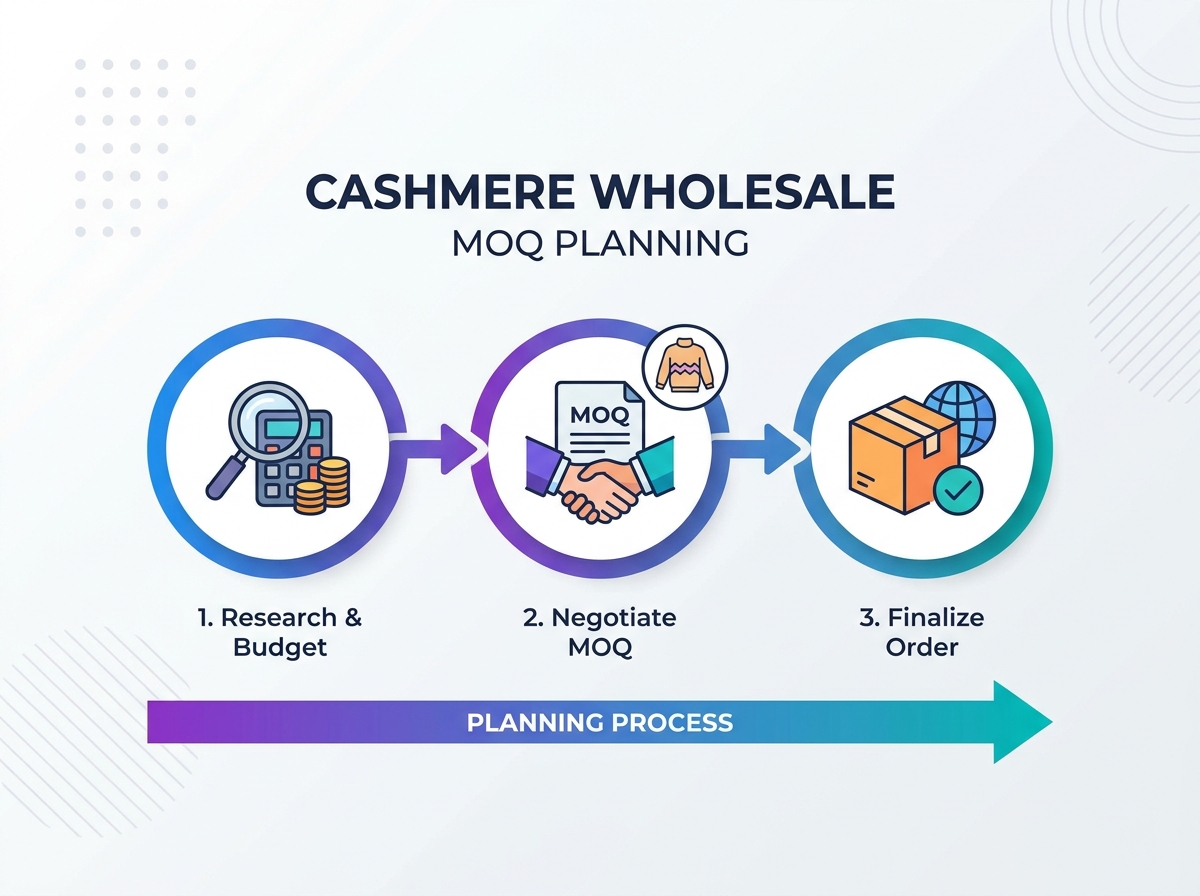
Sourcing luxury textiles carries high capital requirements. Inventory risks multiply quickly when launching new product lines. Minimum Order Quantities (MOQs) create a massive barrier in production. You face a constant tension. You want favorable unit economics through bulk ordering. You also need to protect cash flow. Minimizing dead stock remains critical for new or scaling fashion brands. Securing reliable suppliers requires navigating complex manufacturing constraints. We provide a structured framework for evaluating supplier MOQs. You will learn to compare ready-made versus custom manufacturing routes. You can then strategically plan a first bulk order to mitigate financial risk. Understanding factory operations allows you to negotiate better terms. You will discover how to leverage stock yarns and optimize production runs. This guide breaks down the exact steps needed to launch your collection without trapping vital capital in unsold inventory.
Cashmere MOQs are primarily dictated by raw material constraints—specifically yarn dyeing minimums and machine setup times—rather than arbitrary supplier rules.
First-time buyers must choose between three distinct procurement models: No-MOQ ready-made, low-MOQ white label, or high-MOQ custom OEM, each carrying specific margin and branding trade-offs.
Negotiating lower MOQs is possible by consolidating yarn colors, utilizing stock yarns, or accepting sample surcharges to prove market demand before scaling.
Rigorous sampling, precise SKU planning, and third-party yarn purity verification are non-negotiable steps before committing to any bulk wholesale cashmere agreement.
Table of Contents
Toggle
Why Cashmere Manufacturers Have Minimum Order Quantities
What Drives High MOQs in Cashmere Production?
Scarcity defines high-grade raw fiber sourcing. Herders shear goats once a year during the spring molting season. Supply remains finite across global markets. Spinning mills purchase this raw fiber in massive lots. They process tons of material simultaneously to maintain efficiency. They pass these minimum purchasing requirements down the supply chain directly to garment factories. The raw material must undergo scouring, de-hairing, and sorting before spinning. Each step requires massive volume to run the industrial machinery efficiently.
Yarn dyeing minimums create another major bottleneck. Custom colors require specific vat sizes. Dyeing five kilograms of yarn in a fifty-kilogram vat wastes massive amounts of water, energy, and chemical dyes. The tension inside the vat also becomes compromised with under-loaded batches. Small batches of custom-dyed fiber fail financially. Factories refuse these small runs because they lose money operating large equipment below capacity. They require you to meet the minimum dye lot, which often exceeds one hundred kilograms per color.
Machine setup and calibration demand significant labor. Technicians program complex computerized flat knitting machines for every new pattern. Adjusting tension, gauge, and stitch structures takes hours of downtime. Running a batch of five sweaters wastes a full day of skilled labor. Factories necessitate larger production runs to absorb these heavy setup costs. The linking process, where workers manually attach collars and sleeves stitch by stitch, also requires a learning curve. Workers gain speed only after assembling dozens of identical pieces.
Custom Production vs. Ready-Made MOQs
Custom OEM manufacturing demands strict minimums. You can expect requirements of 100 to 300 pieces per style and color. Factories need these numbers to justify the engineering time. Lead times stretch for months. You must factor in yarn spinning, lab dips, prototyping, and final bulk knitting. The factory must allocate dedicated machine time for your specific production run. They will not interrupt a massive order for a major brand to knit twenty custom pieces for a startup.
Ready-made suppliers operate differently. They offer low or zero minimums by producing standard designs in bulk beforehand. They hold finished inventory in their own warehouses. This model shifts the inventory risk entirely away from the buyer. You purchase straight from their available stock, allowing immediate shipping. These suppliers rely on historical sales data to forecast which colors and silhouettes will sell. They absorb the manufacturing minimums on their end, allowing you to buy in micro-quantities.
Wholesale Cashmere Pricing and MOQ Trade-Offs
How Bulk Pricing Structures Actually Work
Factories scale production efficiently and pass savings to buyers through volume tiering. Standard pricing matrices break down into distinct brackets. Orders of 1 to 50 units sit in the highest tier. Costs drop significantly at 51 to 200 units. They drop again past 200 units. Economies of scale take over as setup costs spread across more garments. The factory spends the same amount of time programming the knitting machine whether they run fifty or five hundred units.
Threshold optimization requires careful calculation. You must identify exactly when increasing an order by a marginal amount crosses into a cheaper volume tier. Adding ten more units might push your order into the next bracket. This strategy effectively lowers the total invoice cost. It significantly improves your blended margins across the entire collection. You must ask the factory for their exact tier breaks before finalizing your purchase order quantities.
Small orders often attract hidden costs. Suppliers apply various surcharges to compensate for inefficiencies. You will encounter premium shipping rates for less-than-container loads. Handling fees eat into your profits. Un-amortized setup costs inflate the final bill when spread across too few units. The factory might also charge a premium for pulling small quantities of stock yarn from their warehouse. You must account for all these variables when calculating your landed cost.
Trade-offs: Low MOQ vs. Per-Unit Profit Margins
Paying premium wholesale rates for low-minimum orders creates a severe margin squeeze. High per-unit costs hurt your retail markup capabilities. You cannot price garments competitively while maintaining healthy profit margins. This dynamic forces brands to position themselves in ultra-luxury segments just to break even. If your landed cost is too high, you have no room for wholesale distribution or seasonal discounting.
You must balance inventory risk against cash flow. A low-minimum test run provides safety. It prevents capital from getting trapped in dead stock. A larger bulk commitment offers higher profitability per unit but requires massive upfront cash. Use a decision framework to evaluate these trade-offs. Consider your customer acquisition cost and expected sell-through rate before committing to a massive production run.
Procurement Strategy
Inventory Risk
Profit Margin Potential
Cash Flow Impact
Design Control
Low MOQ (Test Run)
Very Low
Squeezed / Minimal
Preserves capital for marketing
None (Stock items)
High MOQ (Bulk Order)
High
Maximized
Requires heavy upfront investment
Full Customization
Threshold Optimized
Moderate
Balanced
Optimized invoice efficiency
Moderate (Stock yarns)
How to Plan Your First Bulk Cashmere Order
Pre-Order SKU Planning
Defining the core collection requires discipline. Select the right product categories early. Limit your initial color directions. Avoid SKU bloat at all costs. Offering too many styles dilutes your purchasing power. A tight, focused collection naturally aligns with factory minimums. It allows you to consolidate yarn usage across fewer designs. Focus on proven silhouettes like crewnecks, V-necks, and standard scarves before experimenting with complex cardigans or intarsia patterns.
Approach 1: The "No-MOQ" Ready-Made Route
This route works best for rapid market testing. It suits boutique retail stocking perfectly. Brands with limited initial capital find success here. You bypass the lengthy development phase entirely. You do not need to hire technical designers or wait months for prototypes.
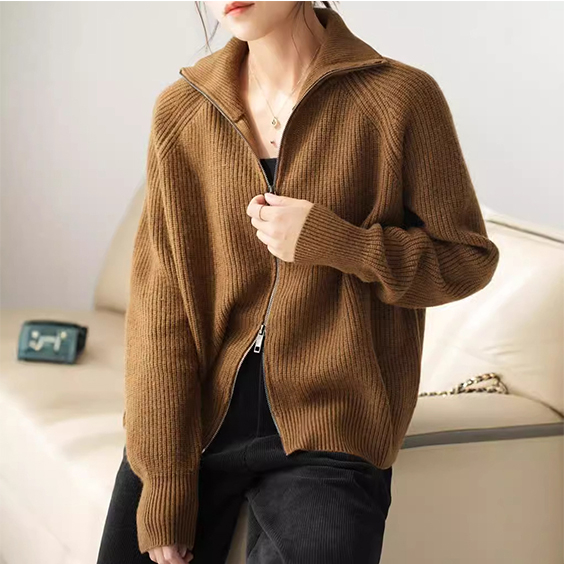
Implementation involves selecting pre-designed, pre-manufactured garments directly from a supplier catalog. For brands seeking timeless European & American aesthetics without heavy MOQ constraints, exploring ready-to-ship luxury cashmere collections allows for rapid market testing and lower inventory risk.
Follow a strict execution checklist before issuing the purchase order:
Confirm exact product lines and available sizes in the current warehouse inventory.
Lock in the specific color direction based on immediate availability.
Specify packing methods to ensure retail-ready delivery without repacking.
Verify precise delivery timing to coordinate with your marketing launches.
Request a physical sample of the exact stock item to verify hand-feel and sizing.
Leverage small, frequent orders to manage cash flow. You can dynamically restock based on real-time retail sell-through data. This agile inventory management prevents overstocking. You only buy what your customers actually purchase.
Limitations exist within this model. You get zero design differentiation. You cannot control yarn grade specifics. You rely entirely on the supplier color forecasting and seasonal choices. Your competitors might sell the exact same garment under a different brand name.
Approach 2: Low-MOQ White Labeling
White labeling proves ideal for brands needing custom branding without the capital for full custom manufacturing. You establish brand identity while keeping initial investments manageable. This bridges the gap between generic stock and full custom production.
Implementation requires purchasing stock designs. You then apply custom neck labels, branded hangtags, and proprietary packaging. The garment remains standard, but the presentation becomes uniquely yours. You must supply the factory with your woven labels and exact placement instructions.
You remain restricted to the supplier existing silhouettes. You must use their stock yarn colors. You will also pay moderate per-unit cost premiums for the relabeling labor. The factory must unpick the generic labels and sew in your custom branding, which adds time and labor costs.
Approach 3: Full Custom OEM Manufacturing
Established brands require full custom manufacturing. Well-funded startups needing unique silhouettes also depend on this route. It allows for custom gauges, proprietary colorways, and exclusive design details. You control every aspect of the garment construction.
Implementation demands rigorous technical preparation. You must submit comprehensive tech packs. You will review and approve lab dips for color accuracy. You commit to standard factory minimums per style and color. You must specify the exact yarn count, knitting gauge, and garment weight.
This approach requires the highest capital outlay. Lead times stretch longest here, often taking three to six months from concept to delivery. Imprecise tech packs create a massive risk of production errors. If you approve a flawed prototype, the factory will knit hundreds of flawed garments.
How to Negotiate Lower MOQs with Cashmere Suppliers
Platform vs. Direct Mill Negotiation
Trading companies on wholesale platforms operate differently than direct mills. Trading companies aggregate orders from multiple small buyers. They often offer lower minimums but charge higher margins. Building direct relationships with specialized manufacturers provides better long-term leverage. Direct mills control the machines and the yarn supply, giving them more flexibility to negotiate terms for promising new brands. You cut out the middleman and communicate directly with the production manager.
Consolidating Colors and Yarn Grades
Use a single stock yarn color across multiple distinct styles. This tactic helps meet a factory overall yarn minimum. It effectively lowers the requirement per individual style. You might order fifty sweaters, thirty cardigans, and twenty scarves all in the same navy blue yarn to hit a one-hundred-piece minimum. The factory only needs to pull one cone of yarn from their warehouse.
Standardization provides massive financial benefits. Stick to standard gauges like 12GG and standard yarn counts like 2/26Nm. Sourcing pieces crafted from 100% Mongolia cashmere yarns ensures that both your standard and customized runs retain maximum softness and long-term durability. Avoid requesting custom spinning for your first collection. Factories hold standard yarns in stock, drastically reducing the barriers to entry. Custom spinning requires massive volume and adds months to your production timeline.
Phased Delivery and Deposit Structures
Negotiate a larger total order volume to secure better pricing. Structure the contract for split deliveries. You might order five hundred units but take delivery in two batches of two hundred and fifty. Use staggered payments to protect cash flow. This tactic gives the factory the volume they need while easing your financial burden. The factory knits the entire order at once but holds the second half in their warehouse until you pay the remaining balance.
Paying Surcharges for Lower Minimums
Offer to pay a defined percentage surcharge to produce a quantity below the stated minimum. You might offer twenty percent above the bulk unit price for a smaller run. Factories often accept this because the surcharge covers their setup inefficiencies. It compensates them for the downtime on their knitting machines.
Position the low-volume request strategically. Frame it as a paid first-time test order. Explain you need to prove market viability. Promise to commit to a contracted, larger second run once the initial test succeeds. Factories value long-term partnerships over single transactions. They will often accommodate a small initial order if they believe your brand will scale.
How to Check Cashmere Quality Before a Bulk Order
Rigorous Sampling Protocols
Step-by-step validation prevents catastrophic bulk errors. Never skip sampling phases. Order a fit sample first to check dimensions and drape. Follow up with a pre-production (PP) sample in the correct yarn and color. Finally, demand a top-of-production (TOP) sample pulled directly from the bulk run before it ships. Review the linking quality around the neckline and armholes.
Mandate in-house testing immediately upon receiving samples. Conduct wash and wear testing. Check for excessive pilling. Measure for shrinkage after washing. Test colorfastness by rubbing the fabric against white cotton. Complete these tests before authorizing the bulk production run. Do not rely solely on the factory internal quality control reports.
Verifying Yarn Purity and Grade
The blending risk plagues the industry. Unscrupulous suppliers often blend Cashmere with fine wool, viscose, or synthetic fibers. They do this to lower their costs while charging you premium prices. Visual inspection cannot reliably detect a ten percent wool blend. Even experienced buyers struggle to feel the difference without laboratory equipment.
Demand independent laboratory testing certifications to mitigate this risk. Use recognized facilities like SGS or Intertek. Verify one hundred percent composition. CCheck the fiber length and micron count. High-quality fibers should measure between 34mm and 36mm in length, with a thickness of 15 to 15.5 microns. Partnering with established brands like Lanly Cashmere provides access to certified, premium-grade knitwear that upholds these stringent purity standards. Shorter fibers will pill excessively and degrade quickly after a few washes.
Define your procurement model clearly, choosing between ready-made, white label, or full OEM production.
Prepare comprehensive tech packs or detailed line sheets before initiating supplier outreach.
Initiate contact with three to five vetted wholesale suppliers to compare communication and capabilities.
Request standard catalogs, stock yarn color cards, and explicit MOQ terms from each shortlisted factory.
FAQ
Q: What is a standard MOQ for custom cashmere manufacturing?
A: Standard minimums for fully custom OEM manufacturing typically range from 100 to 300 pieces per style and color. This volume allows factories to absorb the costs of machine setup, programming, and custom yarn dyeing without losing money on the production run.
Q: Can I start a cashmere brand with no MOQ?
A: Yes, you can start by utilizing ready-made suppliers. These manufacturers hold finished inventory of standard designs. You purchase directly from their stock, allowing you to bypass manufacturing minimums entirely, though you sacrifice custom design capabilities.
Q: How does yarn color affect minimum order quantities?
A: Custom yarn colors require specific dyeing vat sizes. Dyeing small batches wastes water and chemicals, making it financially unviable. Choosing stock yarn colors from a factory existing inventory drastically reduces minimum requirements because the yarn is already processed.
Q: What is the difference between stock yarn and custom-spun yarn?
A: Stock yarn is pre-spun and pre-dyed in standard colors and counts, held in inventory by the factory or spinning mill. Custom-spun yarn is engineered specifically for your order, requiring massive minimums to justify the specialized processing and dyeing.
Q: How do I manage inventory effectively with No-MOQ cashmere orders?
A: Leverage small, frequent orders to maintain cash flow. Monitor your retail sell-through rates daily. Restock only the specific sizes and colors performing well. This agile approach prevents capital from getting trapped in slow-moving dead stock.
Q: Is it better to use wholesale platforms or contact cashmere factories directly for lower MOQs?
A: Wholesale platforms often feature trading companies that aggregate orders, providing lower minimums but higher per-unit costs. Contacting specialized factories directly offers better long-term leverage, higher quality control, and the ability to negotiate custom terms as your brand scales.
Q: How can I verify the quality of wholesale cashmere before buying in bulk?
A: Demand independent laboratory testing from certified facilities like SGS or Intertek. Request reports verifying 100% fiber composition, micron count, and fiber length. Additionally, perform in-house wash, wear, and pilling tests on all pre-production samples.