Introduction
In recent years, the fashion industry has witnessed a significant shift towards sustainability. Among the materials leading this change is cashmere, which balances luxury and eco-consciousness. Milan Fashion Week, especially in Fall-Winter 2026, has played a key role in pushing cashmere into the global spotlight.
In this article, we will explore how Milan Fashion Week has influenced cashmere demand, the global growth of this market, and the challenges it faces in terms of sustainability and ethics.
Milan Fashion Week and Its Influence on Cashmere Demand
Cashmere as a Luxury Fabric in Fashion
At Milan Fashion Week, cashmere has long been associated with luxury and elegance. In recent years, however, the fabric has transcended its traditional role as a winter wardrobe staple and become a symbol of sustainability in high fashion. Designers have increasingly showcased cashmere blends, demonstrating the versatility and eco-conscious appeal of the material.
Brands like Loro Piana and Brunello Cucinelli have taken the lead, unveiling collections that combine cashmere with innovative sustainable fibers. These brands are not only setting trends but also positioning themselves as champions of sustainable luxury. Their collections feature cashmere garments that highlight craftsmanship and the enduring value of high-quality materials.
Fabric and Texture as Key Trends
The 2026 collections at Milan Fashion Week underscored the importance of texture in contemporary fashion. Cashmere, celebrated for its softness and warmth, was a dominant fabric choice for high-end designers. From luxurious overcoats to cozy sweaters, cashmere made a strong statement as a versatile, year-round material. The tactile experience of wearing cashmere garments was a key selling point, as it spoke to both comfort and sophistication.
For instance, Gucci's Fall-Winter collection incorporated cashmere fabrics in unexpected ways, fusing the luxurious texture with experimental silhouettes. This trend reflects a broader movement towards functional luxury, where high-end fashion meets consumer demand for comfort and practicality without compromising on style.
Milan’s Role in Shaping Consumer Preferences
Milan Fashion Week is a global platform where trends are born, and it has played a crucial role in shaping consumer preferences around cashmere. Over the past few seasons, Milan has showcased the growing importance of sustainable luxury. As fashion houses embrace eco-friendly alternatives, cashmere has become a preferred fabric for consumers seeking both exclusivity and environmental responsibility.
This influence extends beyond the runway, as Milan Fashion Week has sparked a wider conversation about the role of sustainability in luxury fashion. The global spotlight on cashmere in these collections has contributed to its increasing popularity, particularly among younger, eco-conscious consumers who are redefining luxury through sustainability.
The Global Cashmere Market: Shifting Dynamics
Growth of Luxury Cashmere Consumption
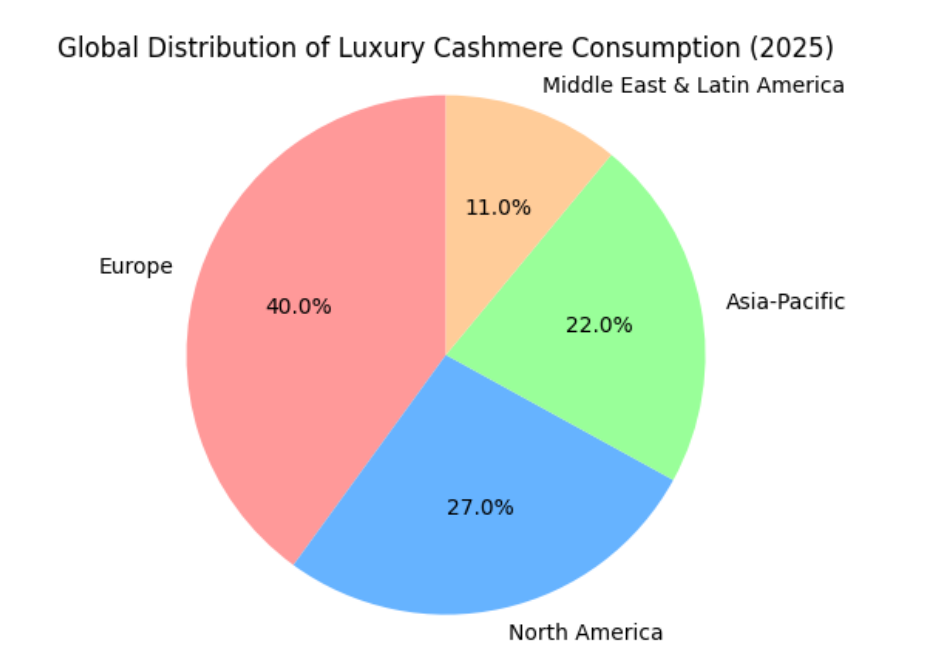
The demand for cashmere has seen a significant surge in recent years, particularly in the luxury segment. As affluent consumers in Europe, North America, and Asia increasingly seek sustainable alternatives, cashmere has emerged as the material of choice. According to market reports, the global cashmere market is expected to reach USD 2.2 billion by 2025, driven by the growing appeal of cashmere blends that offer both luxury and eco-friendliness.
In the U.S., luxury cashmere garments have become a symbol of understated opulence. Consumers are gravitating towards timeless pieces such as cashmere sweaters, scarves, and outerwear, which offer both comfort and durability. Similarly, Europe, with its long tradition of cashmere craftsmanship, continues to dominate the global market, with brands like Loro Piana and Brunello Cucinelli leading the charge.
Region | Market Share | Key Consumer Segments | Growth Factors |
Europe | 40% | Affluent buyers, luxury fashion hubs like Paris, Milan | High brand loyalty, focus on craftsmanship |
North America | 27% | Affluent millennials, eco-conscious consumers | Rising demand for sustainable luxury products |
Asia-Pacific | 22% | Growing middle class, luxury consumers in China, Japan | Increasing purchasing power and demand for luxury goods |
Middle East & Latin America | 11% | High-net-worth individuals, travel retail shoppers | Growth in luxury tourism and online luxury shopping |
Economic Factors Impacting Cashmere Demand
Global economic conditions play a significant role in shaping the demand for cashmere. As disposable incomes rise, particularly in emerging markets, consumers are increasingly willing to invest in high-quality, sustainable fashion. However, economic uncertainties, such as the impact of the COVID-19 pandemic and geopolitical tensions, have also led to shifts in consumer behavior.
The demand for cashmere is not only influenced by economic prosperity but also by the broader movement towards sustainable consumption. As consumers become more aware of the environmental impact of their purchases, they are increasingly seeking products that align with their values. This shift is contributing to the growth of cashmere in the luxury market, especially in the context of eco-conscious fashion.
Regional Variations in Cashmere Consumption
While cashmere is a globally recognized luxury fabric, its consumption varies significantly by region. Europe remains the largest market for luxury cashmere, with Italy, France, and the UK accounting for a substantial share of the global market. In these regions, cashmere is not only a symbol of wealth but also a symbol of heritage and craftsmanship.
In North America, the demand for cashmere is growing rapidly, particularly in the U.S. The country accounts for approximately 27% of global luxury cashmere consumption, driven by a strong preference for sustainable fashion. Meanwhile, in Asia-Pacific, countries like China, Japan, and South Korea are witnessing a steady increase in cashmere consumption, fueled by a growing middle class and an increasing appetite for luxury goods.

Sustainability and Ethical Challenges in Cashmere Production
The Environmental Impact of Cashmere Production
The rapid rise in cashmere demand has had significant environmental consequences. Cashmere goats, which produce the fine fibers used in cashmere garments, are typically raised in regions such as Inner Mongolia, where overgrazing has led to severe land degradation. The expansion of cashmere production has exacerbated these environmental issues, contributing to desertification and the destruction of delicate ecosystems.
As the demand for cashmere continues to rise, there is an urgent need for sustainable production practices that minimize the environmental impact. This includes adopting land management practices that prevent overgrazing, improving animal welfare standards, and exploring alternative sources of cashmere fibers.
Ethical Sourcing of Cashmere
The ethical sourcing of cashmere has become a major concern for both consumers and brands. In response, many fashion companies are working with suppliers who adhere to strict sustainability and ethical standards. Certifications like the Responsible Wool Standard (RWS) and Global Organic Textile Standard (GOTS) are helping ensure that cashmere is sourced from farms that prioritize animal welfare and environmental protection.
Additionally, companies like Brunello Cucinelli and Naadam are making strides in sourcing cashmere from farmers who use sustainable practices, ensuring that the production process has minimal impact on the environment. These efforts not only enhance the brand’s reputation but also contribute to a more sustainable cashmere industry.
Innovation in Sustainable Cashmere Blends
To address sustainability concerns, many brands are turning to innovative cashmere blends that incorporate recycled fibers or alternative materials. Recycled cashmere, which is made from leftover fibers or pre-consumer waste, is one such innovation gaining traction in the market. These blends help reduce the need for virgin cashmere production and lessen the environmental impact.
For example, Naadam has pioneered the use of recycled cashmere, offering consumers a sustainable option without compromising on quality. Other brands are experimenting with blending cashmere with organic cotton or hemp, creating fabrics that are both luxurious and eco-friendly. These innovations are reshaping the future of cashmere in the fashion industry, making it more sustainable and accessible to environmentally conscious consumers.
Consumer Demand for Sustainable Cashmere Fashion
Eco-Conscious Consumers Driving Change
As sustainability becomes a priority for many consumers, demand for eco-friendly cashmere options is on the rise. This shift is particularly evident among millennials and Gen Z consumers, who are increasingly willing to invest in products that align with their values. These consumers are seeking cashmere garments that not only offer luxury and comfort but also contribute to a more sustainable fashion ecosystem.
Brands that embrace sustainability, such as Naadam and Patagonia, are seeing a surge in popularity as consumers prioritize ethical sourcing and environmental responsibility in their purchasing decisions. This trend is pushing other luxury brands to follow suit, integrating sustainable practices into their supply chains to meet the demands of eco-conscious consumers.
Gender-Neutral and Casual Cashmere
One of the most significant shifts in consumer demand is the increasing popularity of gender-neutral and casual luxury fashion. Cashmere has found its place in this new wave of fashion, with brands offering a range of garments that cater to both men and women, as well as unisex styles. The versatility of cashmere makes it an ideal fabric for gender-neutral pieces, such as oversized sweaters, hoodies, and joggers.
Additionally, the rise of comfort-driven fashion, particularly post-pandemic, has fueled the demand for casual cashmere. Consumers are now looking for garments that provide both luxury and comfort, and cashmere has become a go-to fabric for this purpose.
The Role of Digital Platforms in Promoting Sustainable Cashmere
E-commerce has played a pivotal role in the growth of sustainable cashmere fashion. Online platforms like Net-a-Porter, Farfetch, and Saks Fifth Avenue have made it easier for consumers to access luxury cashmere products from sustainable brands. These platforms are also offering more transparency regarding the sourcing and production practices of the brands they carry, making it easier for consumers to make informed purchasing decisions.
In addition, social media influencers and sustainability advocates are driving the conversation around eco-friendly cashmere. Through collaborations and sponsored content, these influencers are encouraging their followers to invest in sustainable fashion and make more conscious purchasing choices.
The Key Players in the Cashmere Industry
Leading Brands and Their Strategies
Top luxury brands like Loro Piana and Brunello Cucinelli have been at the forefront of integrating cashmere into sustainable fashion. These brands have built their reputations on quality and craftsmanship, and their commitment to sustainability is becoming a defining characteristic of their offerings. Loro Piana, for example, has introduced cashmere garments made from recycled fibers, while Brunello Cucinelli sources its cashmere from farms that prioritize ethical practices.
The Growing Role of Smaller Brands in the Cashmere Market
Smaller brands, such as Naadam and Patagonia, are also making significant strides in the cashmere market. These brands have built their identities around sustainability, offering cashmere garments that are both luxurious and eco-friendly. As consumers increasingly seek transparency and ethical sourcing, these smaller brands are poised to capture a larger share of the market, offering a sustainable alternative to traditional luxury labels.
Technological Advancements in Cashmere Manufacturing
Technological innovations are playing a crucial role in enhancing the quality and sustainability of cashmere production. Advances in spinning technologies have allowed manufacturers to create cashmere blends that are stronger, more durable, and more sustainable. Additionally, blockchain traceability is helping to ensure that cashmere fibers are sourced ethically, providing consumers with greater transparency regarding the origin of their garments.
Challenges and Future Outlook for the Cashmere Industry
Balancing Luxury with Sustainability
As the demand for sustainable cashmere grows, luxury brands are facing the challenge of balancing exclusivity with environmental responsibility. Maintaining the high standards of quality and craftsmanship that define luxury fashion, while also reducing the environmental impact of production, is no easy task. However, many brands are rising to the challenge, experimenting with sustainable production methods and eco-friendly materials to meet the demands of both luxury consumers and environmental advocates.
Consumer Education and Transparency in the Cashmere Supply Chain
For the cashmere industry to continue growing sustainably, it is essential for brands to educate consumers about the sourcing and production practices behind their garments. Transparency is key, and brands that provide clear information about the origin of their cashmere fibers and the environmental impact of their production processes will likely build stronger connections with their customers.
Market Trends to Watch in the Coming Years
Looking ahead, the cashmere market is likely to continue its growth trajectory, with innovations in sustainable production methods leading the way. The rise of recycled cashmere, combined with eco-certifications and blockchain traceability, will shape the future of the industry. As more consumers demand sustainable fashion, the cashmere market will need to evolve to meet these expectations, ensuring that the fabric remains synonymous with luxury, comfort, and environmental responsibility.
Conclusion
Milan Fashion Week has significantly influenced the global demand for cashmere, highlighting its luxury and sustainability. As the industry faces challenges like ethical sourcing and environmental concerns, cashmere remains central to these discussions. The future of cashmere depends on balancing luxury with sustainability, offering both quality and responsibility. Inner Mongolia Field Textile Products Co., Ltd. provides high-quality, sustainable cashmere products, helping lead the way toward a greener future in fashion.
FAQ
Q: What is the impact of Milan Fashion Week on global cashmere demand?
A: Milan Fashion Week has helped elevate cashmere as a symbol of luxury and sustainability, significantly influencing consumer preferences for eco-friendly, high-end materials.
Q: Why is cashmere considered a sustainable fabric?
A: Cashmere is a natural fiber, and when sourced responsibly, it can be a more sustainable alternative to synthetic fabrics, minimizing environmental impact.
Q: How has the demand for cashmere evolved in recent years?
A: The demand for cashmere has surged, driven by a growing focus on sustainability in the fashion industry, especially after its spotlight at Milan Fashion Week.
Q: What are the challenges of cashmere production?
A: The main challenges include overgrazing in regions like Inner Mongolia, leading to land degradation, and the need for more ethical sourcing practices in cashmere production.
Q: How does cashmere compare to other luxury fabrics?
A: While cashmere is prized for its softness and warmth, it requires careful sourcing to maintain sustainability, setting it apart from synthetic luxury alternatives.