The third and fourth quarter retail seasons dictate the annual profitability of most apparel brands. High-margin knitwear drives revenue and stabilizes gross margins during this window. Consumer demand for new fall collections spikes in late summer when shoppers transition their wardrobes. Retailers face a constant tension regarding inventory procurement. Order too early, and you tie up operating capital while risking trend misalignment. Order too late, and you face compounding supply chain delays, stockouts, and compromised garment quality from rushed manufacturing.
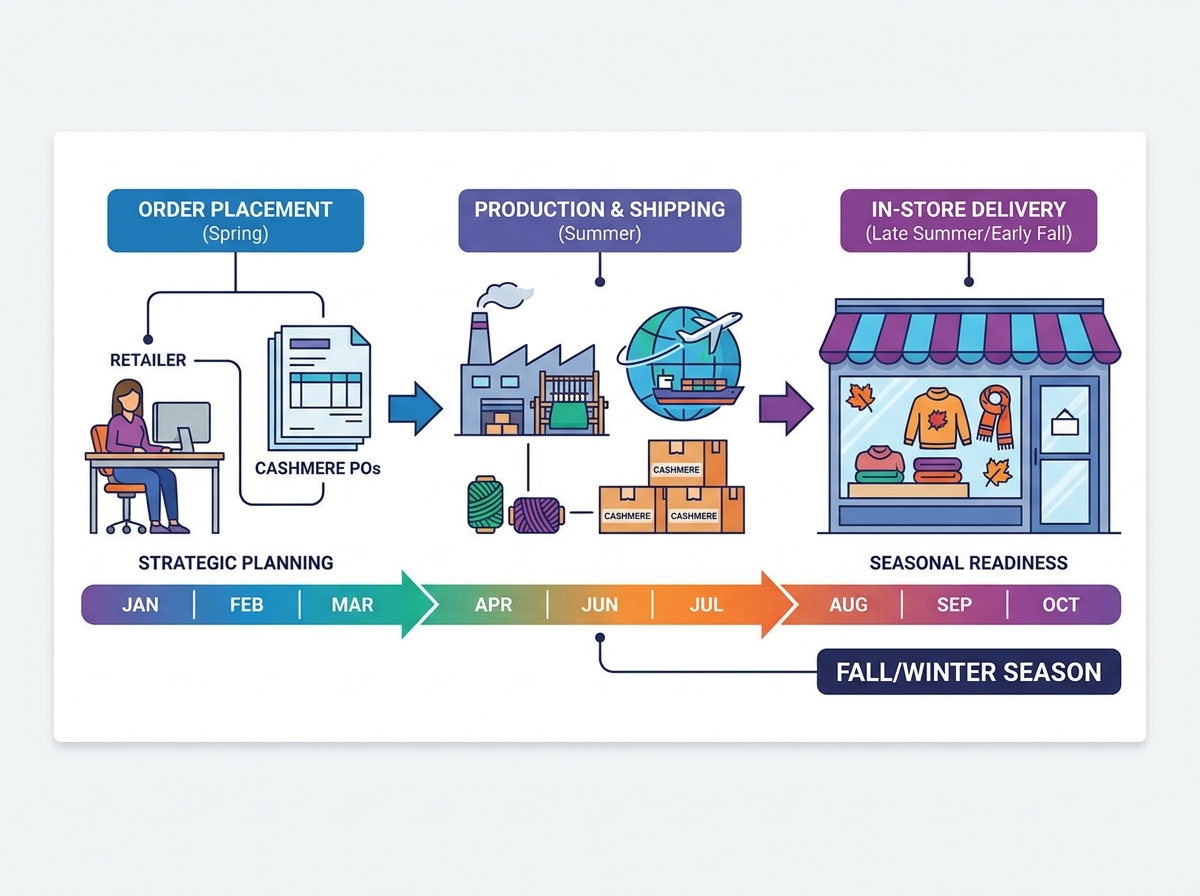
Successful buyers utilize a reverse-engineered timeline approach. This strategy moves backward from target retail floor dates. It factors in transit buffers, production cycles, and raw material sourcing constraints. By mapping these dependencies, retail merchandisers establish the optimal purchasing window for premium knitwear inventory. This ensures products arrive on time, on trend, and at the highest quality standard.
Reverse-Engineered Timelines: To guarantee August/September floor sets and capture early-season consumer demand, bulk wholesale cashmere orders must typically be finalized between February and April.
Production Realities: Raw cashmere sourcing is tied to the spring molting season; aligning orders with this agricultural cycle ensures access to premium, longer-staple fibers before scarcity drives up costs.
Material Lead Time Variances: Cashmere requires longer lead times for sourcing and processing compared to standard cotton or conventional wool, necessitating earlier commitments in the open-to-buy budget.
Quality vs. Speed Trade-offs: Expedited late-season orders often limit retailers to stock yarns, restricting custom dye options and potentially compromising micron count consistency.
Risk Mitigation: Staggering deliveries into transitional (early fall) and heavyweight (deep winter) drops optimizes cash flow and aligns with shifting consumer purchasing behavior.
Table of Contents
Toggle
Cashmere Production Timeline: Plan Backward from Your Delivery Date
Retailers often underestimate the cumulative lead times required to produce premium knitwear. This miscalculation results in missed holiday sales windows. Brands surrender market share to competitors who stocked their floors early. Reverse-engineering your delivery date prevents these logistical failures. You must account for every phase of the product lifecycle. This spans from the moment the fiber leaves the animal to the day the garment hangs on your retail floor.
Raw Material Sourcing and Processing Constraints
The global supply chain for luxury fibers follows an unyielding agricultural cycle. Goats naturally molt their winter coats in the spring. This happens between March and May. Herders collect the raw fiber during this narrow window. Once harvested, the raw material undergoes a lengthy processing phase. Facilities meticulously de-hair the fleece. They separate the coarse outer guard hairs from the soft undercoat. This mechanical process is slow. It yields a small percentage of usable fiber.
Following de-hairing, the fiber requires rigorous scouring. This removes dirt, natural oils, and impurities. Only then can it be spun into usable yarn. Ordering outside these peak processing windows impacts raw material availability. Late orders force manufacturers to source from picked-over stockpiles. Scarcity drives up raw material costs. It frequently forces buyers to accept shorter, inferior fibers just to keep production lines moving.
Manufacturing and Dyeing Lead Times
A standard production cycle for custom-dyed knitwear spans 60 to 90 days. This assumes you already secured the raw yarn. This timeline accounts for custom lab dips. Dyeing facilities create small yarn swatches to match your seasonal Pantone references. Approving these lab dips takes weeks of back-and-forth international shipping. Bespoke spinning allows brands to dictate the exact twist, tension, and ply of the yarn. This customization adds weeks to the production calendar.
Using pre-dyed stock yarn accelerates manufacturing. However, it limits your color palette. You lose the ability to offer unique seasonal hues. Compare these timelines to standard cotton or conventional wool blends. Cotton and sheep's wool benefit from industrialized, year-round supply chains. Premium fibers require specialized handling. Machinery runs at slower speeds to prevent breakage. They must take absolute priority in your factory's production queue.
Freight, Customs, and Distribution Buffers
Transit times add an unpredictable layer to the procurement calendar. Ocean freight requires 30 to 45 days from the origin port in Asia to North America or Europe. Air freight cuts transit time to 7 to 10 days. However, it incurs a severe margin penalty. This penalty can obliterate the profitability of heavy knitwear. Relying on air freight is a last resort.
Beyond transit, buyers must factor in administrative buffers. Allocate 1 to 2 weeks for customs clearance and port congestion. Once the container clears the port, domestic warehouse processing consumes time. Unpacking, quality control inspections, ticketing, folding, and routing mean items are rarely floor-ready upon arrival.
Production Phase
Standard Timeline
Potential Delays
Raw Fiber Sourcing & Scouring
30 - 45 Days
Late orders missing the spring molt window.
Custom Lab Dips & Dyeing
15 - 25 Days
Multiple revision rounds for exact Pantone matches.
Spinning & Knitting
45 - 60 Days
Factory congestion during peak summer months.
Ocean Freight & Customs
35 - 50 Days
Port strikes, rolled bookings, or customs holds.
Domestic Distribution
7 - 14 Days
Warehouse backlog during Q3 intake.
When to Order Wholesale Cashmere for Fall and Winter
Breaking down the annual buying calendar helps align procurement strategies with your business model. We categorize this calendar into three distinct phases. These phases depend on retailer size, customization requirements, and consumer buying habits. Understanding where your brand fits maximizes margins and ensures on-time delivery.
Early-Bird Ordering (January – March)
The early-bird window serves large-scale retailers, private label brands requiring bespoke designs, and high-volume wholesale buyers. Committing capital during this phase offers distinct advantages. You gain immediate access to the best raw materials straight off the spring molt. Securing factory space in February guarantees the lowest production costs before peak season surcharges apply. For buyers planning early-bird assortments of timeless, European-inspired silhouettes, exploring 100% Mongolia cashmere wholesale collections ensures guaranteed access to premium fibers and flawless sample execution.
This strategy carries challenges. It requires upfront capital allocation during a slow retail quarter. Merchandising teams must finalize trend forecasting, color palettes, and silhouette designs 8 to 10 months before the consumer sees the product. This requires confidence in historical sales data and market intuition.
The Standard Wholesale Window (April – June)
This is the most common procurement phase for mid-sized boutiques and independent retailers. These buyers select inventory from established brand lookbooks rather than developing private label tech packs from scratch. Buying in the spring offers better visibility into upcoming fall trends. You utilize pre-designed collections that require shorter production runs since the development phase is complete.
The primary drawback is factory congestion. Manufacturing schedules peak between May and July. Any slight delay in yarn delivery or lab dip approval compounds rapidly. It pushes your completion date back by weeks. The ocean freight timeline becomes a tighter window. A single rolled booking at the origin port easily delays your August floor set until late September.
Late/In-Season Replenishment (July – September)
The late summer window is strictly for reactive buyers. They attempt to fill unexpected inventory gaps or test new markets with limited runs. The risks associated with this timeline are substantial. Buyers are limited to available stock yarns and in-stock manufacturing programs. Customization, unique colors, and bespoke branding are impossible during this phase.
To hit winter retail floors on time, air freight becomes mandatory. The cost of flying dense, heavy knitwear across the globe compresses gross margins. While this window allows retailers to chase emerging micro-trends, it should only represent a tiny fraction of your overall open-to-buy budget.
Analyze your historical Q3/Q4 sales data to determine baseline volume requirements.
Assess your current cash reserves to see if early-bird capital allocation is feasible.
Determine the percentage of your assortment that requires custom Pantone dyeing versus stock colors.
Map out your absolute drop-dead dates for warehouse receiving.
Select the ordering window that balances your customization needs with your risk tolerance for freight delays.
How to Choose a Reliable Cashmere Supplier
How you vet and select your manufacturing partners determines your final product quality. The garment must physically justify its premium retail price point on the hanger. It must meet strict consumer expectations for durability, warmth, and hand-feel. Evaluating suppliers requires looking past the initial prototype. You must verify the technical specifications of their raw materials.
Verifying Yarn Specifications (Micron Count and Length)
When sourcing premium Cashmere, retailers must demand complete transparency regarding fiber dimensions. The industry standard for Grade A fiber dictates a diameter of 14 to 15.5 microns and a staple length of 34 to 36 millimeters. The length is just as critical as the micron count. Shorter fibers cannot anchor securely within the twisted yarn structure.
When short fibers are used, friction from normal wear pulls them loose. This leads to immediate and excessive pilling. Customers quickly return pilled garments. This damages brand trust and inflates reverse logistics costs. Always request detailed, certified yarn specifications and independent lab test results before committing your budget to a new factory partner. Sourcing through established brands like Lanly Cashmere provides certified Grade A pure cashmere that meets strict international softness and pilling-resistance standards.
Low-end blends, heavily processed fast fashion. High pilling risk.
Yarn Weight, Gauge, and Ply Suitability by Season
Buyers must utilize a strict framework for matching product specifications to delivery dates and seasonal styling needs. Understanding the difference between spinning techniques is vital. Worsted spun yarn is combed to align the fibers. This results in a smoother, denser, and more lightweight drape perfectly suited for early fall. Woolen spun yarn is loftier. It traps more air between the fibers, making it exceptionally warm and ideal for deep winter.
For early fall transitional pieces, recommend a 12-gauge, 2-ply construction. This creates a breathable, lightweight garment ideal for layering. Shift your technical specifications to a 5-gauge or 7-gauge, 4-ply construction for deep winter and holiday assortments. These chunky, heavyweight knits provide the substantial warmth consumers expect during peak winter months.
Compliance and Ethical Sourcing Standards
Consumer demand for supply chain traceability continues to rise across all retail sectors. Modern shoppers want verified assurance regarding animal welfare, fair labor practices, and sustainable land management. Sourcing undocumented fibers exposes your brand to severe reputational risk.
Instruct your buying teams to look for specific, globally recognized certifications. The Good Cashmere Standard (GCS) and the Sustainable Fibre Alliance (SFA) provide robust, audited frameworks for ethical sourcing. Partnering with certified suppliers mitigates public relations risks. It also provides powerful marketing narratives that resonate with conscientious consumers.
Cashmere Purchasing Costs and Inventory Risk Management
Balancing the cost of goods sold against operational risks dictates the success of your sourcing strategy. Retailers must protect their cash flow while securing the inventory necessary to drive Q4 profitability. This requires strategic negotiation and highly disciplined assortment planning.
Cash Flow Management vs. Early Order Discounts
Analyze the financial impact of negotiating staggered payment terms with your manufacturing partners. A standard, healthy arrangement involves a 30% deposit to initiate raw material procurement and production. The remaining 70% balance is paid upon the issuance of the bill of lading, right before the goods board the vessel.
This staggered structure protects your corporate liquidity during the slower spring and summer retail months. It keeps operating capital available for immediate payroll and marketing needs while securely locking in your future inventory at favorable early-bird pricing tiers.
Assortment Planning: Core Classics vs. Trend Colors
Disciplined buyers utilize a split strategy for their open-to-buy budget. Commit 70% of your knitwear budget early in the year to core neutral tones. Black, navy, charcoal, and camel carry exceptionally low markdown risk. These foundational colors appeal heavily to early-season shoppers building their core wardrobes and rarely go out of style.
Reserve the remaining 30% of your budget for later commitments on seasonal fashion colors. Wait until summer trend data solidifies before finalizing these vibrant, higher-risk hues. Balance your luxury fiber budget alongside other seasonal knitwear, such as merino wool and heavy cotton. This ensures a diversified, multi-tiered price-point architecture across your entire store.
Navigating Supply Chain Disruptions
Global supply chains remain inherently volatile. Identify common bottlenecks early in the planning phase. Regional energy shortages in major Asian manufacturing hubs can halt factory production without warning. Geopolitical tensions frequently disrupt major ocean freight shipping lanes, causing massive delays.
Establish concrete mitigation tactics before disruptions occur. Implement dual-sourcing strategies by splitting your bulk orders between factories in different geographic regions. Build a mandatory 3-week buffer into your critical path calendar. This buffer absorbs unforeseen delays without jeopardizing your hard launch dates.
How to Plan Your Cashmere Assortment by Delivery Season
Translating a massive bulk wholesale order into a strategic retail merchandising calendar is essential for maximizing full-price sell-through. You must align your inventory drops with how consumers actually experience the weather, style their outfits, and layer throughout the progressing season.
Drop 1 (August/September): Transitional Cashmere
Your late summer and early fall deliveries should focus entirely on transitional weights. Prioritize lightweight luxury cashmere knits and versatile wraps that cater to high-end consumers looking for effortless, early-season layering.. This assortment captures the early fall shopper who is looking for cozy, lightweight layering pieces suitable for crisp mornings and warmer afternoons.
To execute this drop successfully, order timing is incredibly strict. Tech packs and bulk orders must be finalized by March at the absolute latest. This ensures the goods can navigate the 90-day production cycle and 45-day ocean transit time to arrive in your distribution center by late July.
Drop 2 (October/November): Heavyweight Knits and Gifting
Your mid-fall deliveries must pivot to heavyweight construction and high-margin accessories. Focus your assortment on chunky fisherman sweaters, ribbed turtlenecks, and substantial outerwear layering pieces. This drop must also include a heavy concentration of accessories like scarves, beanies, and gloves to capture the massive holiday gifting surge.
This delivery targets deep winter preparedness. Because the floor date is later, order timing offers slight flexibility. You can finalize these heavier units in April or early May. This staggered approach allows your merchandising team slightly more time to assess early Q3 economic indicators before committing the remainder of your seasonal capital.
Conclusion
Audit your current inventory carryover immediately to identify exact open-to-buy needs for the upcoming fall season.
Request physical yarn cards, color swatches, and knit-down samples from prospective suppliers today to avoid delays during the lab dip approval process.
Finalize all tech packs, size grading charts, and custom Pantone selections before the spring manufacturing rush peaks.
Negotiate staggered payment terms with your factory partners to protect your operating liquidity during the summer months.
Founded in 2009 and based in Hohhot, Inner Mongolia—one of China’s important cashmere and wool sourcing regions—Inner Mongolia Field Textile Products Co., Ltd. specializes in cashmere and cashmere-blend products for international customers. Its product capabilities have expanded from scarves and shawls to knitwear and a broad range of fashion accessories, supporting buyers seeking flexible seasonal collections and one-stop cashmere sourcing.
FAQ
Q: What is the lead time for wholesale cashmere orders?
A: The standard lead time is typically 3 to 5 months. This timeline accounts for raw material sourcing, bespoke spinning, custom lab dips, a 60 to 90-day manufacturing cycle, and 30 to 45 days for ocean freight and customs clearance.
Q: When do consumers typically start buying fall cashmere?
A: Consumer demand spikes in late summer, specifically August and September. Shoppers begin purchasing transitional lightweight knits for crisp mornings and early fall layering, making August floor sets critical for capturing full-price sales.
Q: How do cashmere ordering timelines compare to other knitwear like wool or cotton?
A: Luxury fibers require significantly earlier commitments. Unlike cotton or sheep's wool, which have year-round supply chains, premium goat fiber is tied to a strict spring molting season and requires specialized, time-consuming de-hairing processes.
Q: Can retailers order cashmere in the summer for fall delivery?
A: Yes, but with severe limitations. Summer orders restrict buyers to pre-dyed stock yarns, eliminating custom color options. Additionally, hitting fall floor dates requires expensive air freight, which drastically compresses retail gross margins.
Q: What does "Grade A" cashmere mean for retail?
A: Grade A refers to the highest quality fiber, typically measuring 14 to 15.5 microns in diameter and 34 to 36 millimeters in length. This ensures a superior, ultra-soft hand-feel and prevents excessive pilling, reducing customer returns.